Recovery Care

Injuries & Pain

One clinician, start to finish, to help you return to your life.

Stolen Movement

It used to be something you didn’t think about. Now, you need an extra hand to get up, worry about your back as you bend over, or wonder if you can trust your knee today. Everybody’s story is different as to how the movement was stolen.

The question that starts everything here: What can we do to get it back? What does it take to trust the knee or the back to stop hurting? Sometimes it’s a muscle that stopped firing. Sometimes it’s a joint taking too much load. The cause changes where the investigation starts.

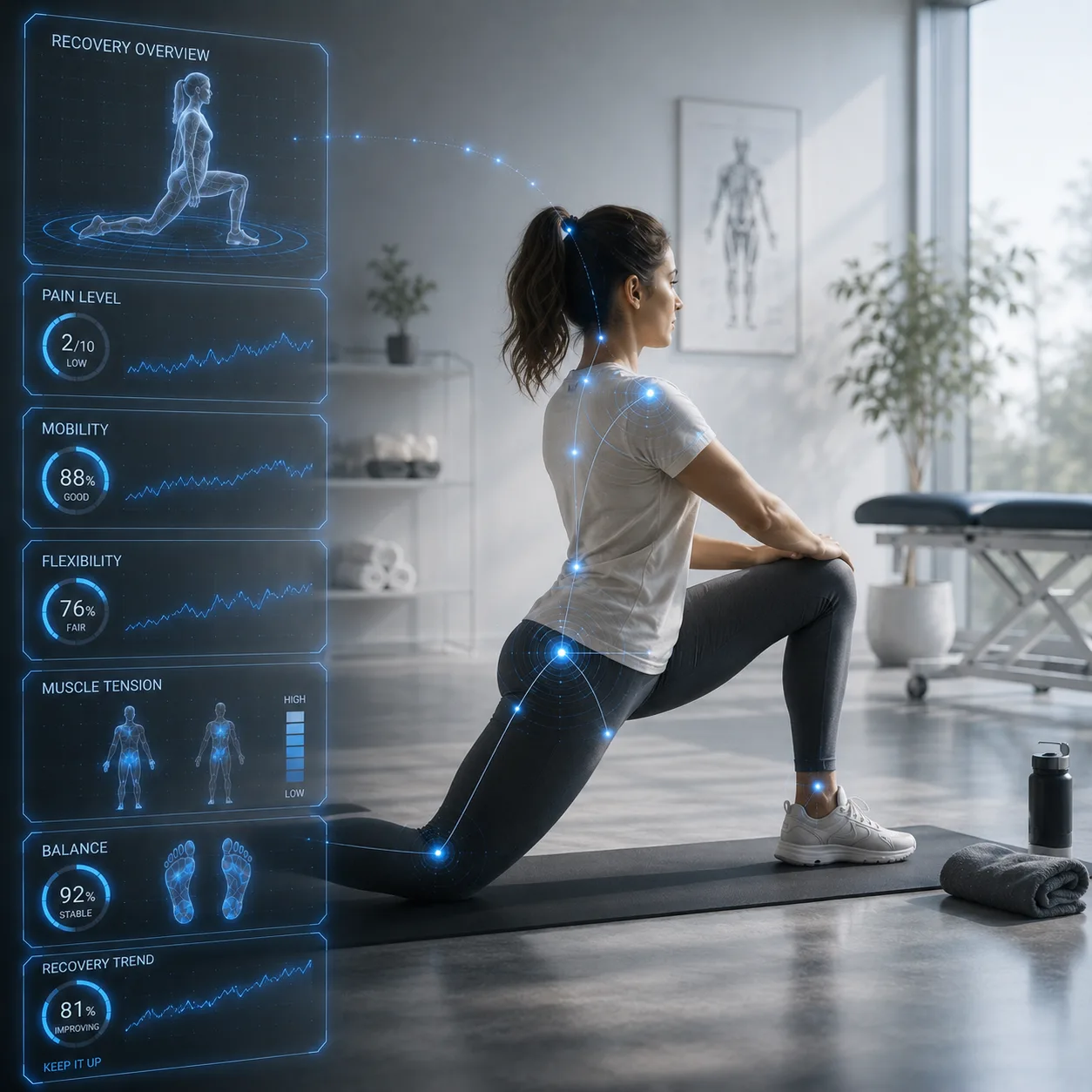
A hip-flexor stretch tracked in the Lab: pain level, mobility, flexibility, and recovery trend scored on a HUD overlay

Common Conditions

These are just some of the common patterns we see.

Low Back Pain

Better for a few days, then one wrong move brings it right back.

Low Back Pain

The back isn't just sore. The deep muscles that stabilize the spine under load aren't activating the way they should, so the same structure keeps absorbing stress it shouldn't. Treatment retrains that system so the spine has real support when you move, not just when things are calm.

Neck Pain

Stiff in the morning, locked up by the end of the day, never fully gone.

Neck Pain

The tightness in your traps and upper neck is usually the body compensating, not the original problem. When the deeper stabilizers of the cervical spine aren't activating properly, the surrounding muscles work overtime to pick up the slack. Retraining those stabilizers is what gets you out of the compensation pattern for good.

Sciatica

Burning or shooting symptoms that flare with sitting, bending, or no warning at all.

Sciatica

Symptoms that travel down the leg are almost always coming from somewhere higher up. Part of the exam determines whether a specific movement can start moving that pain back toward the spine. When it can, that single finding changes the entire direction of treatment.

Shoulder Pain

Overhead reaching hurts, sleep is affected, and the same range keeps feeling blocked.

Shoulder Pain

The shoulder doesn't work in isolation. How your shoulder blade moves, how your upper back rotates, and whether the neck is contributing all affect what the rotator cuff is being asked to do. Treatment works through that whole system, not just the joint that hurts.

Knee Pain

Stairs, squats, and standing up after sitting are the moments that expose it.

Knee Pain

The knee is usually absorbing load the hip should be controlling. When the hip and the muscles above it aren't doing their job, the knee takes the stress instead. Retraining that pattern above the knee is what keeps the pain from coming back the next time you squat or take the stairs.

Plantar Fasciitis

That first step out of bed is sharp, then the cycle starts again.

Plantar Fasciitis

The plantar fascia keeps getting irritated because the small muscles inside the foot that support the arch aren't doing their job. Rest helps the soreness settle, but the load pattern hasn't changed. Treatment retrains those muscles to support the arch so the fascia isn't absorbing stress on every step.

Headaches

Recurring. Hard to predict. Hard to get ahead of.

Headaches

Most headaches start in the upper neck, not the head. Underactive cervical stabilizers load the surrounding structures, which drive pain into the head, temples, or behind the eyes. One movement test confirms the source. When it shifts the pattern, so does the plan.

Tennis Elbow

Gripping, lifting, turning a door handle. The elbow that won't stop complaining.

Tennis Elbow

Tennis elbow is a tendon problem, not an inflammation problem. The tendon has gone through a failed healing cycle, which is why rest and anti-inflammatories don't fix it. Recovery requires progressive tendon loading: specific work that stimulates healing without aggravating the tissue.

Your Personalized Plan

The exam determines your specific needs: what gets treated, in what order, and what you rebuild towards.

01

Evaluate

We watch how the movement works right now: where it hurts, where it stops, what compensates to get you through it, and which piece stopped firing somewhere along the way. By the end of it we can name what is limiting you.

02

Treat

Treatment goes after whatever the exam named as the limitation. Take that away and the body has less reason to compensate, so the movement itself changes instead of the pain backing off for a week and returning.

03

Rebuild

The end goal is getting back to your life better than before. Together we rebuild the movements so they hold up outside of treatment, and so your body is more durable for whatever the week asks of it.

Injured athlete? The same three steps run on a season’s timeline in In The Game, our elite athlete program for competitive youth and college athletes, where the last step is built to what the position demands.

The Integrated Model

Adjustments

Specific, movement-informed adjustments for a joint that has stopped moving the way the rest of the chain expects it to.

See How Adjustments Fit

Dry Needling & Soft Tissue

Cupping, scraping, fascial work, and dry needling, used where the exam says the tissue is what is holding the range back.

See The Tissue Tools

Real Recoveries

“Everyone I went to focused on the pain, but they all brushed aside the severe numbness. Marshall listened intently to all of my concerns and had me feeling so much better after my first session than in months of care from other providers.”
— Zoe Maffit
“I had a bad back injury from a workout accident. I went from unable to get out of bed to completely healed up.”
— Luke Lack
“In a span of 3 months, nearly all of the pain I’ve had is gone when engaging in those activities now. You’ll likely end up stronger than you can remember without needing regular assistance.”
— Nathan Wilkening

If You’re In, I’m In

A patient said it to me first, and it is still the best way to describe how this works. If you are willing to put in the work, we will figure out what it takes to get back your stolen movement.