
Chiropractic Adjustments

Targeted, Not Routine

Two people can walk in with the same pain. One of them gets adjusted and the other doesn’t. What decides that isn’t the complaint, it’s what the exam finds before anything gets adjusted.

The Motion Exam

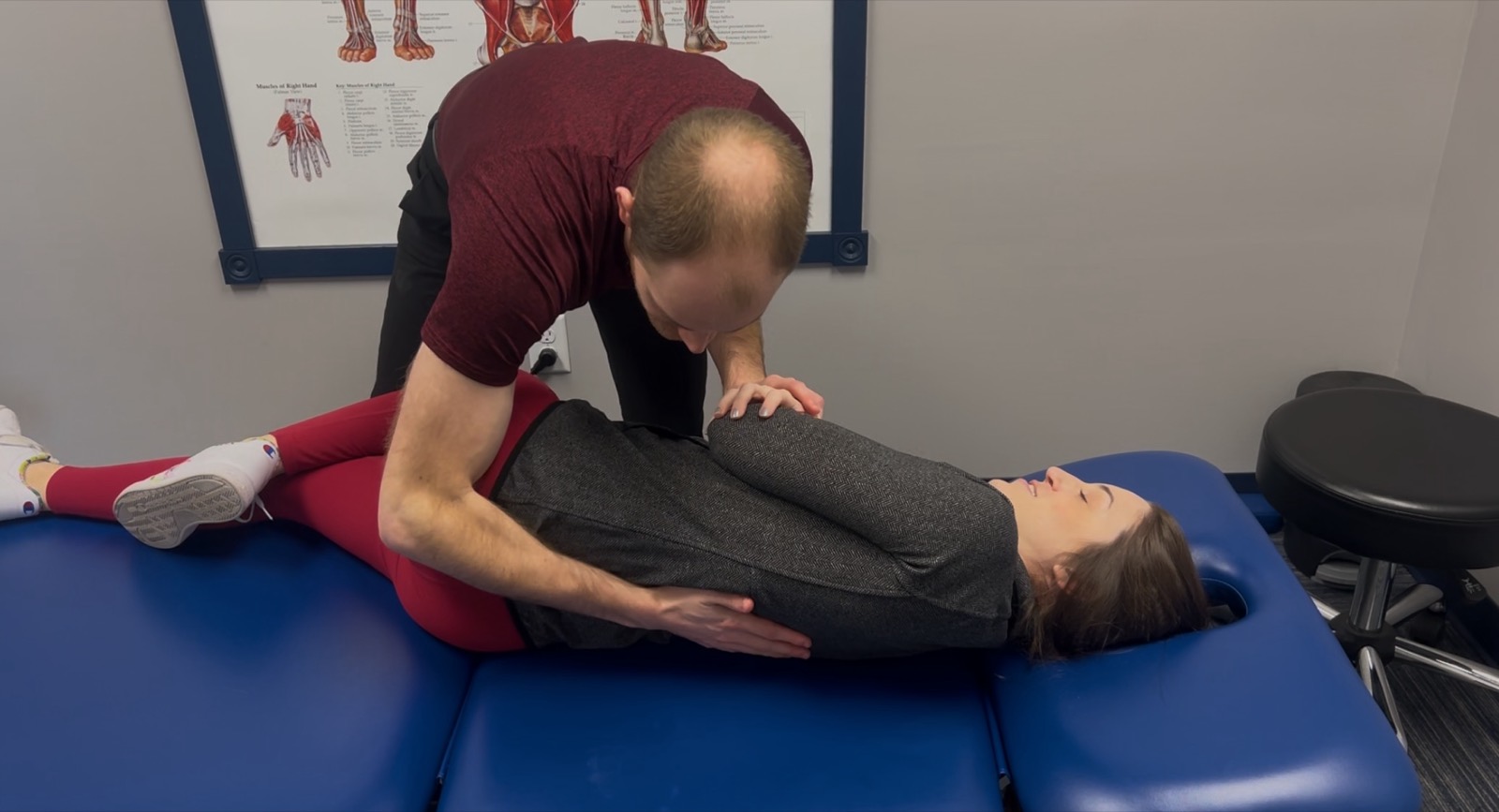
Before anything gets adjusted, the segments in the area get moved through their range one at a time. At the end of that range a healthy joint still has a little give in it. A fixated one hits a hard stop with nothing behind it. That’s what tells us which segment to adjust and in which direction. It’s the method taught by the Motion Palpation Institute.

It’s also why the segment that gets adjusted is often not the segment that hurts. The sore spot is a symptom with a location, not a diagnosis. Treating it as both is how relief keeps expiring.

Dr. Marshall Gevers moving a segment through its range during a motion exam
Junctional Zones

The Usual Suspects

The spine isn’t one uniform column. Some regions are built to move and some are built to hold, and they alternate down its length. At the junctions where one job gives way to the other, the spine has no clean protocol for the switch, so it defaults to stiffness. A junction that stiffens stops carrying its share, and the levels above and below start covering for it.

Cervicothoracic (C7–T1)

The junction between the neck and the upper back. When it locks up, the neck above it takes over the movement it stopped making, and the complaints arrive as upper trap tension, an ache along the inner edge of the shoulder blade, or headaches that keep coming back on the same schedule.
Thoracolumbar (T12–L1)

The junction between the mid back and the low back. Rotation is the thoracic spine’s job and the lumbar spine is built to resist it, so when this junction stops rotating the low back rotates instead. Golfers, pitchers, hockey players, and anyone whose work involves the same twist a few hundred times a day collect it here.

Lumbosacral (L5–S1)

The junction where the lumbar spine meets the pelvis, and the level where disc and nerve root problems concentrate. A fixation here gets covered by the lumbar levels above it and the sacroiliac joint below it at once, so the picture is usually mixed: low back tightness one week, hip restriction the next, symptoms that move with whatever you did recently.

The Pop

The sound is cavitation: gas coming out of solution inside the joint capsule as the pressure in there changes. It isn’t bone, and nothing is going back into place, because nothing went out of place. What the adjustment restores is motion. You get that whether or not you hear anything.

Some people want the sound and feel shortchanged without it. Others would rather never hear it again. Neither reaction tells you whether it worked. If you’d rather skip the pop entirely, mobilization and other lower-force options do the same job.

The Integrated Model

An adjustment gives a fixated segment its motion back. That’s real, and it leaves one question open: why did it stiffen in the first place? A joint doesn’t decide that on its own. Something in the way you move kept loading it that way until it stopped.

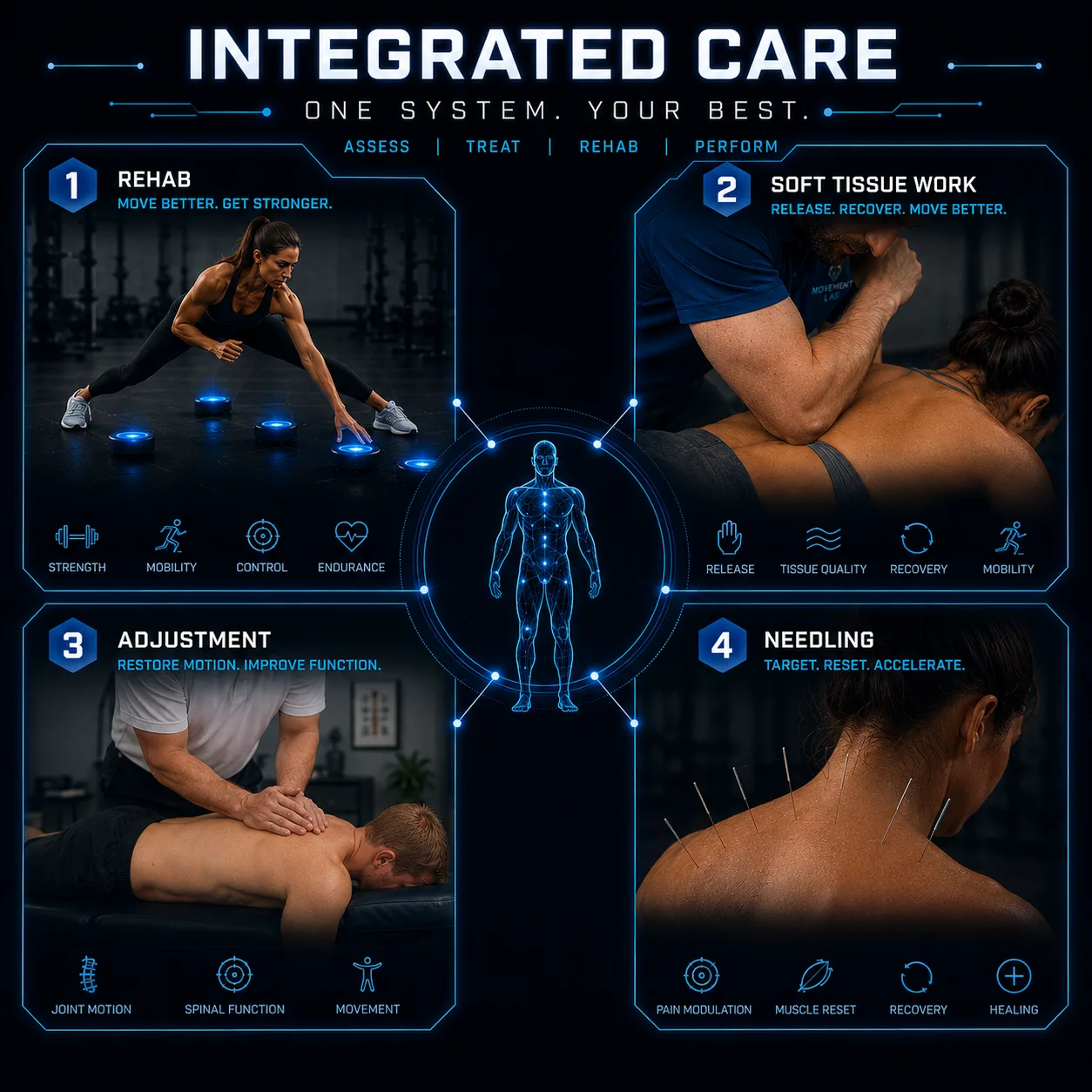
That’s why the adjustment is one part of the care model and never the whole of it. Rehab is the part that matters most: it changes the pattern that stiffened the joint, so the motion you got back has a reason to stay. That part of the plan is The Movement Model. Soft tissue work and dry needling get added around it, wherever the exam says they’re needed.

Movement Lab's integrated model: assessment, manual therapy, functional rehab, and neurodynamics working as one plan

Start With The Exam

Whatever brought you in, the plan comes out of the same first visit. The exam tells us what needs to move, what needs to hold, and what the work between visits looks like.