
Closing The Gap
Tryouts, a showcase, the next level. The training that got them here has stopped producing more. What is left is not a strength gap.
 vs
vs 

An injury changed how they move, or the training stopped producing more. Either way something specific is holding the level down, and the first hour here is spent finding it. In The Game is the elite athlete program at Movement Lab, for competitive youth and college athletes.
Tryouts, a showcase, the next level. The training that got them here has stopped producing more. What is left is not a strength gap.
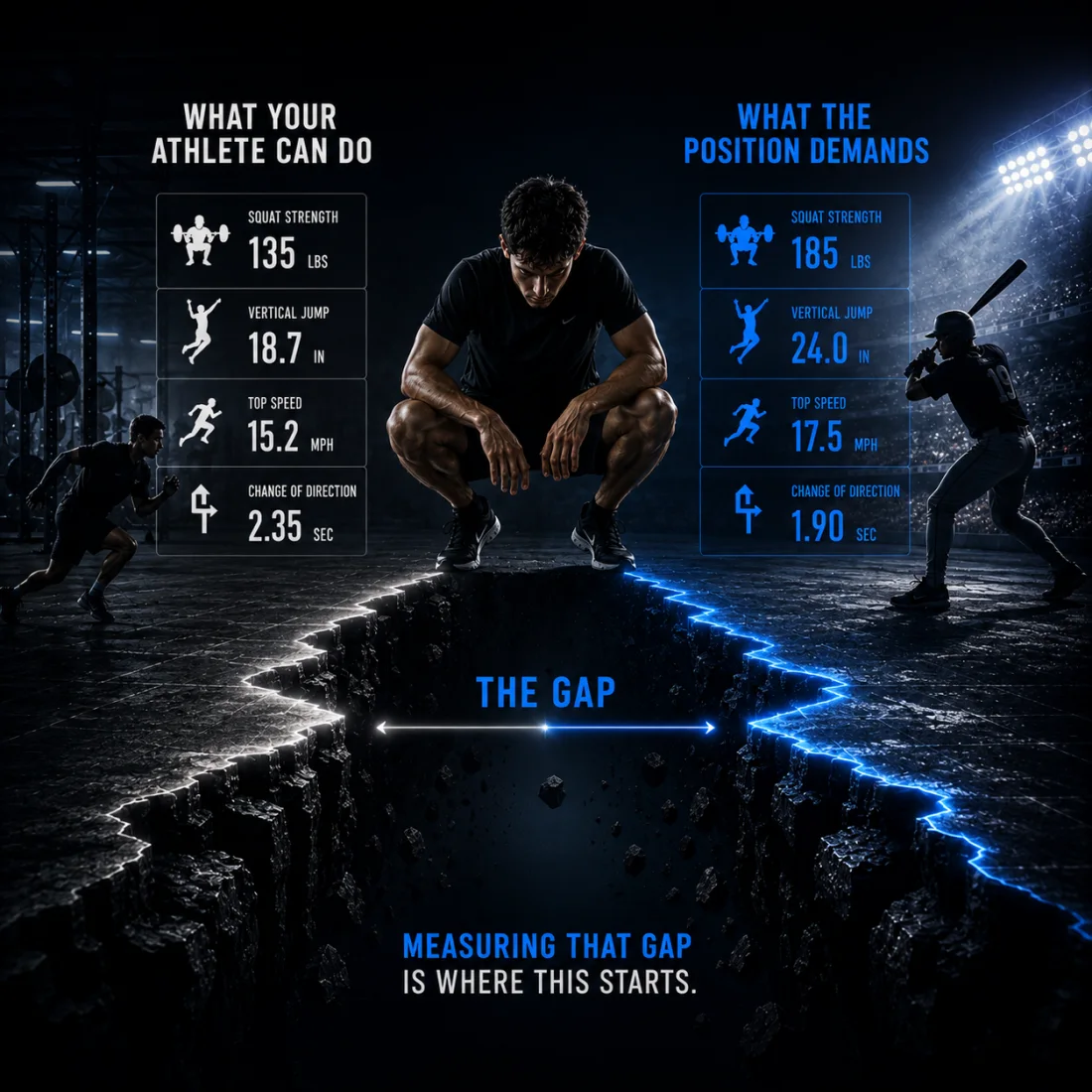
Nothing is injured yet. There is a tightness that keeps showing up, a side that never feels the same, a second half where they fade. Small things, until one of them costs a season.
It has not settled, or it keeps coming back to the same spot. Rest and time have given you a timeline instead of an explanation. The first work here is finding what the pain is protecting.
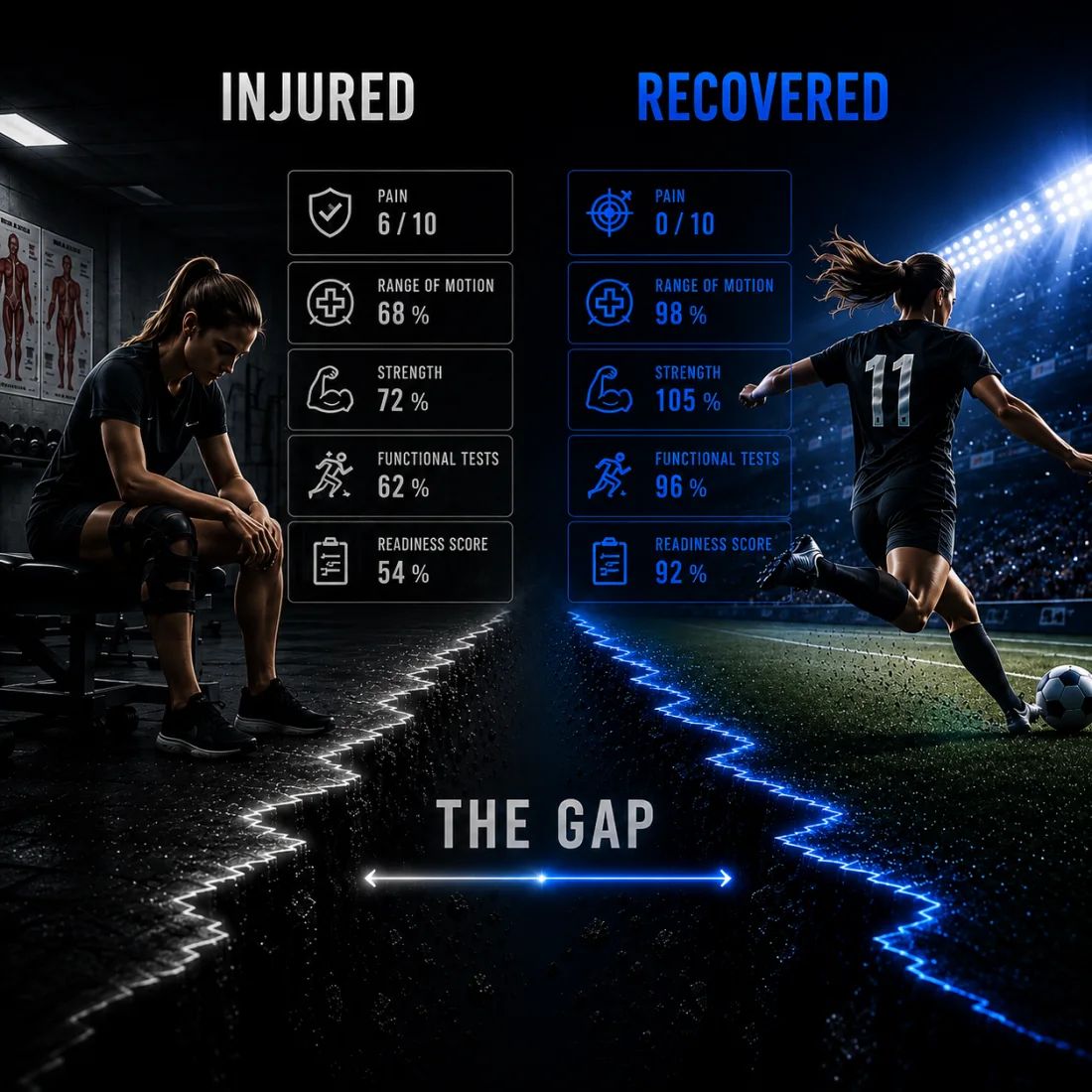
The injury healed and the clearance came through. The movement, the confidence, or the output has not caught up. On paper they are available. In the game they are hesitating.
Adult athlete? This athlete program is built around youth and college sport timelines. If you train and something is off, start with Performance Diagnostics instead.
Cleared means the tissue healed. That is a real answer to a real question, and it is a different question from whether the pattern that let the injury happen has changed.
A stronger squat means the squat got stronger. Whether it reaches the ice, the mound, or the last ten minutes of a match is the sport’s standard, and a gym does not measure against it.
Injured or not, it comes down to the same distance: what your athlete can do now, against what their sport is asking of them. Neither version of this aims at getting back to where they were. Back to normal is a medical finish line, and it is not the one they are training for.
This is the Performance Diagnostics program turned up to eleven. The season, the tryout, the next level. Or coming back from an injury with a bang instead of a question mark. Better than before.
Three phases, in the same order, every time. Where an athlete starts decides how much of the first phase they need, not whether they need it.
The first hour measures how they move, how they load, and how they produce power, and settles anything flared up enough to test honestly. By the end the sticking point has a name and a number, and that is what the plan gets built from.
Movement patterns and tissue capacity get built in the order they depend on each other. Hands-on work clears restriction so the loading has somewhere to go.
Speed, cutting, contact, and repeat efforts get trained at the demand the position sets. A goalie’s hips and a pitcher’s shoulder break down under different demands, and the last phase is the sport, not a version of it.
All of it is built backward from what your athlete is training for: the season, the tryout, the level above this one. Better than before, not back to where they were.
Dr. Marshall Gevers tore his labrum in a car accident during his playing career. Six to eight months was the number he was given. He trained through the wait before surgery instead of resting through it, and rebuilt on function rather than on the calendar.
It is also why this program does not treat pain-free as the finish. Marshall knows the difference between a shoulder that has healed and a shoulder he trusted taking a hit, because he spent months in the space between them.
That outcome is not a promise. It is what this approach produced for him.
Nothing gets decided before this call. It is where the sport, the season, the history, and the calendar get on the table, and where you get a straight answer about whether this is the right thing for your athlete.
The injury, the plateau, the thing that keeps coming back, or the thing that has not felt right since. Wherever it starts, we start there.
The sport, the position, where they sit in the season, and what the calendar in front of them looks like.
Prior treatment, current training, timelines, and what progress has looked like so far.
Whether the program fits your athlete, and what the right next step is if it does not. Both of those are real answers.

It starts with a call, and the call is free. You have read what the program involves and who it is built for. Back in the game and better than before is the aim on both sides of it. This is where it gets applied to your athlete: their sport, their position, their season, and whether the answer is yes.